Disclosure: this post contains affiliate links. If you sign up through them, we may earn a commission at no extra cost to you. Thistle’s menus, prices, delivery areas and offers were checked in October 2026 and can change, so confirm the details on its website before you order. This article is general information, not medical or nutrition advice. If you have a health condition or specific dietary needs, talk to your doctor or a registered dietitian.
Most of us don’t need another lecture about vegetables. We already know that eating more plants, more fiber and fewer ultra-processed foods is good for us. The Dietary Guidelines for Americans recommend roughly 22 to 34 grams of fiber a day for adults, depending on age and sex, yet most Americans eat far less than that.
So why is the gap so stubborn? It usually isn’t a lack of willpower or knowledge. It’s logistics. Plant-rich cooking takes planning, chopping, roasting and washing up. Fresh produce spoils if your week gets busy. And after a long day, a drive-through or a delivery app wins because it requires zero decisions.
This guide is about closing that gap in a way that fits real life. We’ll look at practical strategies for eating more plants and fiber without spending hours in the kitchen, and how a prepared meal service like Thistle can do a lot of the heavy lifting. You’ll also find a simple four-week plan for getting started, tips for pairing ready-made meals with easy home cooking, and ways to keep the cost reasonable.
See Thistle’s plant-forward menu
Why plants and fiber matter
Fiber is the part of plant foods that your body doesn’t fully digest. It’s found in vegetables, fruit, whole grains, beans, lentils, nuts and seeds. Diets rich in these foods are widely associated with better digestive health, more stable energy between meals, and feeling full for longer. Fiber also feeds the bacteria in your gut, which is one reason researchers have become so interested in it over the past decade.
Plants bring more than fiber. A colorful mix of vegetables, legumes and grains supplies a wide range of vitamins, minerals and plant compounds that you simply can’t get from a narrow, repetitive diet. Variety matters, and that’s another place where busy weeks tend to fall short. When you’re short on time, it’s easy to eat the same three things on repeat.
None of this means you have to go fully vegan or vegetarian. A plant-forward approach simply puts plants at the center of the plate, with animal protein as an option rather than the default. It’s flexible, realistic and easy to sustain.
The real barriers to eating more plants
If eating more plants were simple, everyone would do it. Here are the four barriers that trip most people up, and they’re worth naming because each one has a fix.
- Time. Washing, chopping, roasting and cooking grains and beans takes far longer than reheating a frozen pizza. On a weeknight, time usually wins.
- Skills and ideas. Plenty of people know how to cook a steak but not how to make a lentil dish taste exciting. Without good recipes, plant-based meals can feel bland.
- Waste. Fresh produce is perishable. If your week changes, that bunch of kale ends up in the trash, which is frustrating and expensive.
- Decision fatigue. After a day full of decisions, figuring out what to eat is one decision too many. The easiest option wins, and the easiest option is rarely the healthiest.
A prepared meal service addresses all four at once. That’s not the only solution, but it’s one of the most effective for people whose main obstacle is a full calendar.
What Thistle brings to the table
Thistle is a San Francisco company, founded in 2013, that delivers fully prepared, ready-to-eat meals (vegconomist). It describes itself as plant-centered: meals are built on vegetables, grains and legumes, and you can choose to add animal protein. There’s no cooking involved. Meals arrive chilled, and you eat them cold or warm them briefly.
Here’s what makes it a good fit for anyone trying to eat more plants and fiber, based on Thistle’s published standards (Thistle):
- Fiber is built in. Lunches and dinners are designed to deliver 10 to 15 grams of fiber each.
- Protein isn’t an afterthought. Lunches and dinners offer 20 to 40 grams of protein, and Thistle says a full day of its meals can reach up to 100 grams.
- Variety is the default. Thistle says a day of its meals often includes more than 50 varieties of fruits and vegetables. Menus are chef-designed, seasonal and change every week.
- Common irritants are left out. Meals are made without gluten and dairy, with no added sweeteners or preservatives.
- It’s flexible. Choose breakfast, lunch, dinner or a mix, starting from four meals a week, and skip, pause or cancel at any time.
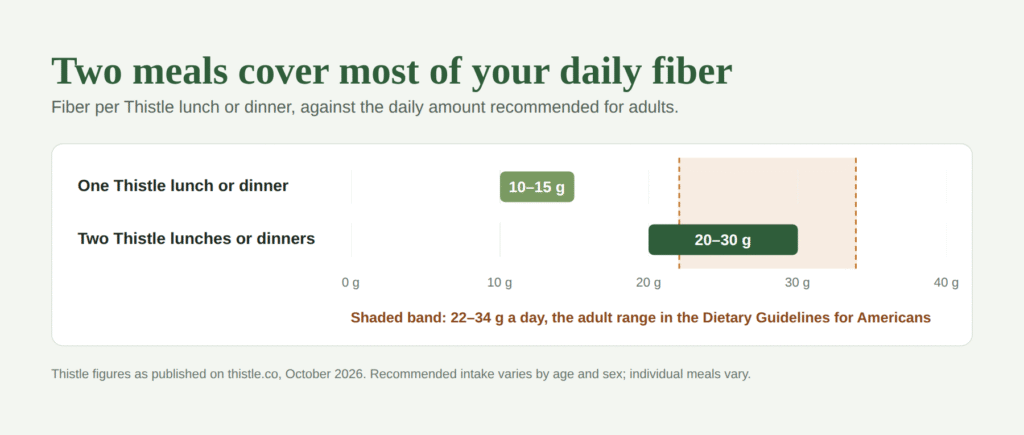
To put the fiber numbers in context: two Thistle lunches or dinners provide about 20 to 30 grams of fiber, which covers most or all of the daily recommendation for many adults. Compare that with a typical quick lunch of a white-bread sandwich and chips, and the difference is significant.
Five strategies for eating more plants, with or without cooking
These strategies work whether you cook, order meals, or do a bit of both. For each one, we’ll share a do-it-yourself approach and how Thistle can make it easier.
1. Make plants half your plate
A simple visual rule beats counting grams. Aim for roughly half your plate to be vegetables and fruit, about a quarter whole grains or starchy vegetables, and about a quarter protein, whether that’s beans, tofu, eggs, fish or chicken. Add a little healthy fat, such as olive oil, avocado, nuts or seeds, for flavor and satisfaction.
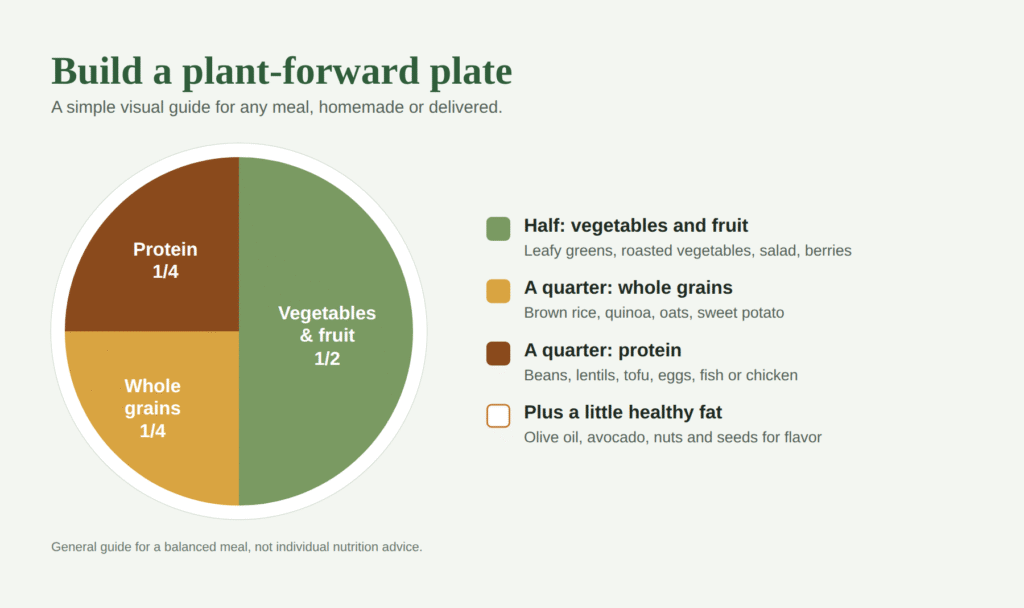
Do it yourself: fill half your plate with a bagged salad or a tray of roasted vegetables before adding anything else.
With Thistle: most bowls and salads are already built this way, with vegetables and grains at the base and protein on top.
2. Lean on beans and lentils
Beans, chickpeas and lentils are among the most fiber-dense foods you can eat, and they’re inexpensive and filling. They’re also the ingredient most people feel unsure about cooking.
Do it yourself: keep canned beans in the pantry. Rinse them and toss them into salads, soups or wraps.
With Thistle: legumes show up regularly on the menu in bowls, salads and soups, often paired with bold sauces that make them genuinely craveable.
3. Swap refined grains for whole grains
Brown rice, quinoa, farro, oats and whole-grain pasta all carry more fiber than their refined versions. The swap is small, but it adds up over a week.
Do it yourself: cook a big batch of a whole grain on Sunday and use it through the week.
With Thistle: grain bowls are a staple, and because meals are made without gluten, you’ll see grains like rice and quinoa rather than wheat-based ones.
4. Eat the rainbow
Different colors in fruits and vegetables tend to signal different nutrients. The more varied your produce, the broader the range of nutrients you get.
Do it yourself: try adding one new vegetable to your shopping list each week.
With Thistle: a seasonal menu that changes weekly brings variety without you having to plan it.
5. Make the healthy option the easy option
This is the strategy that makes all the others stick. If healthy food is ready and waiting, you’ll eat it. If it requires effort, you’ll often reach for something else.
Do it yourself: prep a few grab-and-go items on the weekend, such as washed fruit, cut vegetables and a jar of dressing.
With Thistle: this is the whole point. Your fridge is stocked with complete, ready-to-eat meals, so the healthy choice is also the fastest one.
Stock your fridge with Thistle meals
Five common myths about plant-forward eating
Plenty of people hesitate to eat more plants because of things they’ve heard. Here are five common myths, and what’s actually true.
Myth 1: “You can’t get enough protein from plants”
Beans, lentils, tofu, tempeh, edamame, nuts, seeds and whole grains all contain protein, and combining them across the day covers most people’s needs. Thistle’s meals show how this works in practice, with 20 to 40 grams of protein per lunch and dinner. And if you want more, you can add animal protein.
Myth 2: “Plant-based food is bland”
Plant dishes are only bland when they’re under-seasoned. Good plant-forward cooking relies on bold sauces, herbs, spices, citrus, toasted nuts and contrasting textures. That’s where a chef-designed menu helps: someone else has already figured out how to make chickpeas and roasted squash exciting.
Myth 3: “You have to go all-in”
Plant-forward isn’t the same as vegan. Simply shifting the balance of your plate toward plants, a few meals at a time, is a meaningful change. Many people find that once they have a few plant-based meals they genuinely love, the rest follows naturally.
Myth 4: “Eating healthy is always expensive”
Beans, lentils, oats, frozen vegetables and seasonal produce are among the most affordable foods in the grocery store. Prepared meals do cost more, but if they replace takeout lunches or delivery dinners, they can cost about the same while delivering better nutrition. It depends on what you’re replacing.
Myth 5: “Salads won’t keep you full”
A plate of lettuce won’t. But a salad with beans, whole grains, roasted vegetables, a protein and a satisfying dressing is a complete meal. The combination of fiber, protein and healthy fat is what keeps you full, not the lettuce.
Try Thistle’s bowls and salads
A four-week Thistle starter plan
The best way to build a new habit is to start small and add as you go. This plan eases you in, so you learn what you like and how many meals you actually need.
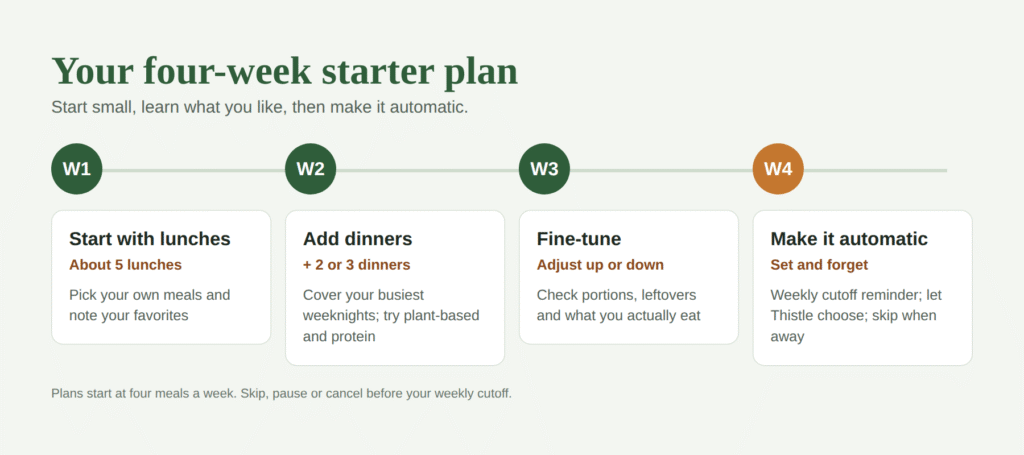
Week 1: Start with weekday lunches
Order around five lunches. Lunch is the meal busy people most often skip or replace with something less healthy, so it’s the easiest win. Pick your own meals so you can try a range of bowls, salads and soups. Make a note of your favorites as you go.
Week 2: Add two or three dinners
Keep the lunches and add dinners for your busiest weeknights, the ones where you’d normally order takeout. If you’re curious, try one meal with animal protein and one fully plant-based to see which you prefer.
Week 3: Fine-tune
By now you’ll know whether the portion sizes suit you, which meals you love, and how many you actually get through. Adjust your plan up or down. If you’re very active, consider adding snacks or a breakfast. If you have leftovers, scale back.
Week 4: Make it automatic
Set a weekly reminder before your order cutoff. On busy weeks, let Thistle choose meals based on your preferences. On weeks when you’re traveling, skip. At this point, healthy eating is something that happens by default, not something you have to plan.
After four weeks, take stock. Are you eating more vegetables? Ordering less takeout? Feeling better about your lunches? If the answer is yes, you’ve found a routine worth keeping.
What a plant-forward day can look like
Here are two illustrations of a plant-forward weekday: one that leans on Thistle, and one that’s mostly do-it-yourself. Neither is a prescription. They’re meant to show how small choices add up.
A busy day with Thistle
- Breakfast: a grab-and-go Thistle breakfast, eaten at your desk with a coffee.
- Lunch: a Thistle grain bowl or hearty salad, packed the night before.
- Snack: a piece of fruit and a handful of nuts from home.
- Dinner: a Thistle dinner on your latest workday, warmed in a couple of minutes.
Total effort: a few minutes. With two Thistle lunches or dinners, fiber alone lands around 20 to 30 grams before you count the fruit and nuts.
A do-it-yourself day
- Breakfast: oats with berries, seeds and a spoon of nut butter.
- Lunch: leftovers from a weekend batch of lentil soup, with a slice of whole-grain toast.
- Snack: carrot sticks and hummus.
- Dinner: a stir-fry of frozen vegetables and tofu or chicken over brown rice.
Total effort: a bit of weekend prep plus 20 to 30 minutes on the night. Very doable, as long as the week goes to plan.
Many people end up somewhere in between: Thistle on the busiest days, simple home cooking on the calmer ones.
Pairing Thistle with easy home cooking
You don’t have to choose between a meal service and cooking. Many people get the best of both by letting Thistle handle the busiest meals and keeping a few simple home-cooked meals in the mix.
Keep a plant-forward pantry
A few staples make it easy to throw together a healthy meal on nights when you don’t have a Thistle meal:
- Canned beans, chickpeas and lentils
- Whole grains such as brown rice, quinoa and oats
- Frozen vegetables and frozen berries
- Nuts, seeds and nut butter
- Olive oil, vinegar, lemons, garlic and a few favorite spices
- Eggs or tofu, if you eat them
Cook once on the weekend
If you enjoy cooking, make one big batch dish on the weekend, such as a soup, a curry or a tray of roasted vegetables. Combined with Thistle meals for weekday lunches and busy dinners, that covers most of the week with very little effort.
Customize your Thistle meals
If a portion feels small, it’s easy to bulk it up with what you have on hand: a handful of greens, a boiled egg, some extra beans or a slice of whole-grain toast. A squeeze of lemon or a sprinkle of fresh herbs also brightens any bowl.
Keeping the cost reasonable
Healthy prepared meals cost more than cooking from scratch, so it’s worth being smart about how you use them. Thistle’s plans start at $42 a week, with meals as low as $11.50 each, according to its website (Thistle). Independent reviewers report paying roughly $11.50 to $18 per meal, with plant-based meals at the lower end (The Kitchn).
Here’s how to get the most value:
- Replace your most expensive meals first. If you regularly spend on takeout lunches or delivery-app dinners, swapping those for Thistle meals can cost about the same or less, and you get better nutrition.
- Order enough to lower the per-meal price. Per-meal prices generally drop as you order more meals each week, so a slightly bigger order can be better value.
- Choose plant-based meals. They’re usually cheaper than meals with animal protein.
- Skip weeks you don’t need. Traveling, hosting family or cooking more than usual? Skip and pay nothing that week.
- Watch the extras. Juices and snacks are tempting, but they add up quickly. Add them only if you’ll use them.
- Look for offers. Thistle often runs promotions for new customers and has a referral program. Check the current deal when you sign up.
Eating well at work
Lunch at work is where healthy intentions often fall apart. A few simple habits help:
- Pack it the night before. Put tomorrow’s lunch in your bag or at the front of the fridge so you don’t forget it in the morning rush.
- Keep it cold. Use the office fridge or an insulated lunch bag with an ice pack. Thistle meals are fresh, not frozen, so they need to stay chilled until you eat them.
- Follow the label. Each meal is labeled with ingredients, heating instructions and the date to eat it by. Eat the earliest-dated meals first.
- Take a real break. Stepping away from your desk to eat, even for 15 minutes, makes the meal more satisfying and helps you notice when you’re full.
Simple ways to track your progress
You don’t need to count calories to know whether you’re eating more plants. A few lightweight ways to check in:
- Count your plants. Each week, jot down how many different fruits, vegetables, grains, beans, nuts and seeds you ate. Herbs and spices count too. Trying to beat last week’s number is a fun way to build variety.
- Notice your takeout habit. How many times did you order delivery this week compared with last month? For many people, this is the clearest sign that a new routine is working.
- Check in with how you feel. Pay attention to your energy in the mid-afternoon, how satisfied you feel after meals, and how often you find yourself reaching for snacks.
- Keep a favorites list. Every meal you love, whether from Thistle or your own kitchen, is a meal you’re likely to eat again.
Bringing your household along
Changing how you eat is easier when the people you live with are on board. A few ideas:
- Start with your own meals. You don’t need to change everyone’s diet at once. Order Thistle lunches for yourself, and let the results speak for themselves.
- Mix plant-based and protein meals. If your partner wants meat, choose meals with added animal protein for them and plant-based meals for you, all in the same order.
- Share a favorite. When you find a dish you love, let someone else taste it. Good food is the most persuasive argument.
- Cook together on weekends. Let Thistle cover the hectic weekdays, and make weekend cooking something you enjoy together rather than a chore.
Is Thistle right for you?
Thistle is a strong fit if your main obstacle to eating well is time. It works especially well if you live alone or as a couple, work long hours, avoid gluten or dairy, or want to eat more plants without learning to cook a new way. It’s also helpful for short, busy stretches, such as a big project at work, a move or the first weeks with a new baby.
It may be less of a fit if you love cooking and see it as part of your downtime, if you’re feeding a large family on a tight budget, or if you prefer large, meat-heavy portions. And because Thistle delivers to specific regions, it’s only an option if you live in its delivery area. It currently delivers to towns in 22 states plus Washington, D.C., including major metros on both coasts and in the Midwest and Mountain West (Thistle Help Center). Enter your ZIP code on its website to check.
Plant-forward eating for different lifestyles
If you work out regularly
Active people often worry that eating more plants means less protein. Choosing meals at the higher end of Thistle’s 20 to 40 gram range, adding animal protein to some meals, and keeping a protein-rich snack on hand covers most needs. Time a Thistle meal within a few hours after training, and you’ve taken care of recovery without any prep.
If you work shifts or irregular hours
Shift workers often eat at odd times, when the only options are vending machines or fast food. A fridge stocked with ready-to-eat meals means a balanced meal is available whenever your break happens to fall, at noon or at 3 a.m.
If you’re a new parent
The first weeks with a baby leave little time or energy for cooking. Ready-made meals that you can eat one-handed are a genuine help, and they can make a thoughtful gift from friends and family. Thistle offers gift cards for exactly this kind of situation.
If you’re eating for two
Couples often find that cooking for two leads to leftovers and wasted ingredients. Ordering Thistle dinners for your busiest nights, and cooking together on the others, strikes a good balance.
A quick glossary
- Plant-forward: an eating style that puts plants at the center of the plate without excluding animal foods.
- Legumes: beans, lentils, chickpeas and peas. They’re high in both fiber and protein.
- Whole grains: grains that keep the bran and germ, such as brown rice, oats, quinoa and farro. They have more fiber than refined grains.
- Soluble fiber: a type of fiber that dissolves in water and forms a gel, found in oats, beans and some fruits.
- Insoluble fiber: a type of fiber that adds bulk, found in whole grains, nuts and many vegetables.
- Prepared meals: fully cooked meals that are ready to eat, as opposed to meal kits, which you cook yourself.
Frequently asked questions
Do I have to be vegan to use Thistle?
No. Thistle’s default menu is plant-based, but you can add animal protein to meals. It suits vegans, vegetarians and meat eaters who want to eat more plants.
How much fiber will I get from Thistle meals?
Thistle says each lunch and dinner provides 10 to 15 grams of fiber, so two meals provide about 20 to 30 grams. Individual meals vary, so check the nutrition information for each dish.
Will I feel full eating plant-forward meals?
Many people find that high-fiber, high-protein meals keep them satisfied for longer. Portion needs vary, though. If you’re very active or have a big appetite, you may want to add a snack or bulk up meals with extras from home.
Is eating more fiber suddenly a problem?
If your current diet is low in fiber, increasing it quickly can cause bloating or discomfort for some people. A gradual increase and plenty of water can help. If you have a digestive condition, check with your doctor first.
Can I use Thistle if I avoid gluten?
Thistle says all meals are made without gluten and dairy. If you have celiac disease or a severe allergy, review its allergen information and ask its team about cross-contact before ordering.
What if I don’t like a meal?
Because the menu changes weekly and you can choose your own meals, it’s easy to avoid dishes you didn’t enjoy. Keeping a list of favorites helps you pick quickly each week.
Can I pause my subscription?
Yes. You can skip a week, pause or cancel at any time, as long as you make changes before your weekly order cutoff.
How is Thistle different from a meal kit?
A meal kit sends raw ingredients and a recipe, so you still cook and clean up. Thistle sends fully prepared meals that are ready to eat, which saves far more time on busy days.
Does Thistle deliver everywhere in the US?
No. It delivers to towns in 22 states plus Washington, D.C., including areas around New York, Boston, Philadelphia, Washington, Atlanta, Chicago, Denver, Phoenix, Los Angeles, the Bay Area, Portland and Seattle. Check your ZIP code on Thistle’s website.
Can I order Thistle as a gift?
Yes. Thistle offers gift cards, which make a practical present for new parents, friends who are recovering from an illness, or anyone going through a busy season. Check that the recipient’s ZIP code is in the delivery area first.
The bottom line
Eating more plants and fiber isn’t complicated, but it does take time and planning that many of us don’t have. The most reliable way to close the gap is to make the healthy option the easy option. You can do that with weekend batch cooking, a well-stocked pantry and a few simple habits.
Or you can let someone else do the hard part. Thistle delivers chef-made, plant-centered meals with 10 to 15 grams of fiber and 20 to 40 grams of protein per lunch and dinner, ready the moment you open the fridge. Start with a week of lunches, see how you feel, and build from there. With no long-term commitment, there’s little to lose in trying.